
Finding mouse droppings or insect damage in your stored belongings can be frustrating. To prevent storage unit pests in Dallas, TX, it’s important to clean your items, choose appropriate packing materials, and reduce moisture before moving everything into storage. A little preparation can help protect furniture, clothing, and other valuables.
The good news: most pest problems are preventable with smart prep work. The bad news: no facility can guarantee a pest-free environment, because the biggest risk factor is usually what you bring into the unit yourself.
Why Pests Target Storage Units
Pests don’t care about your stuff they’re looking for three things: food, water, and shelter. Storage units offer all three if you’re not careful.
Cardboard boxes provide nesting material. Upholstered furniture offers hiding spots. Leftover crumbs in a moving box become a five-star meal for roaches. And in Texas, where temperatures swing from blazing summer heat to sudden humidity spikes after thunderstorms, even a small moisture problem can attract silverfish, spiders, and worse.
When you’re evaluating storage units, look for clean hallways, good lighting, and sealed entry points. But understand that facility cleanliness only goes so far what you pack matters more than where you pack it.
Clean and Dry Everything Before Storage
This is the step most people skip, and it’s the one that causes the most problems.
One of the simplest ways to prevent storage unit pests is to remove food residue, dirt, and moisture from belongings before packing them. Clean and completely dry items are less likely to attract insects or create favorable conditions for infestations.
Wash or vacuum every item going into storage. Furniture, boxes, camping gear, seasonal decorations all of it. Dirt and food residue attract pests. Even a few crumbs in the corner of a box can trigger an infestation.
Dry everything completely. Dallas summers are humid enough without you adding damp towels or musty clothing to the mix. Moisture leads to mold, and mold attracts insects.
Use the Right Packing Materials
Cardboard is cheap and convenient. It’s also a pest magnet. Roaches love corrugated cardboard, and mice chew through it in minutes.
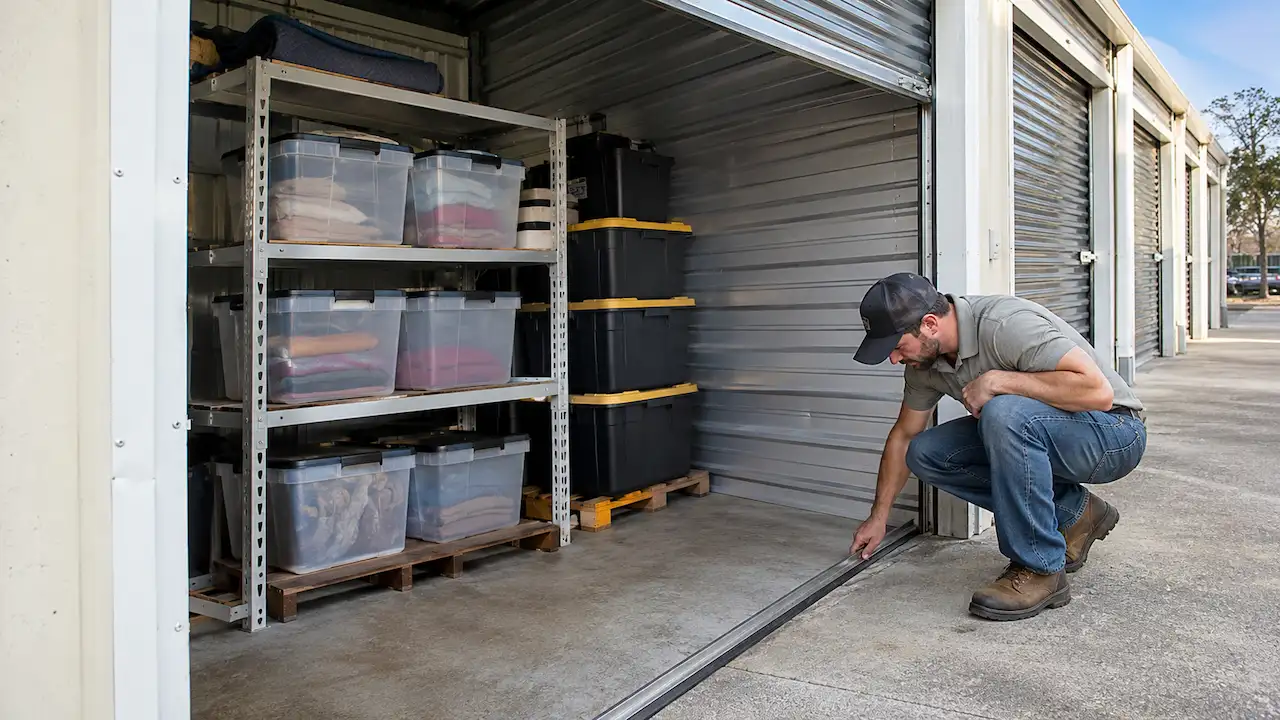
Switch to hard plastic bins with tight-fitting lids. They cost more up front, but they’re reusable, stackable, and pest-resistant. If you must use cardboard, tape every seam and avoid leaving boxes directly on the floor.
For furniture, use plastic covers or moving blankets never leave upholstered pieces exposed. Mattresses and box springs should go in sealed plastic mattress bags. When you’re stocking up on supplies, grab bins and covers from a place that understands storage needs, like moving and storage suppliers who carry the right materials.
Never Store Food or Perishables
This should be obvious, but I’ve seen it happen: someone packs a moving box in a hurry and forgets about the bag of chips at the bottom, or the box of protein bars tucked in with the camping gear.
- No food, including pet food and birdseed
- No plants or organic material
- No toiletries that contain oils or scents pests find attractive
- No garbage bags “temporarily” stored before dump runs
If you’re storing a refrigerator or microwave, clean it thoroughly and leave the doors propped open to prevent mold and odors.
Elevate Items Off the Floor
Ground-level storage is pest highway. Bugs and rodents travel along walls and baseboards, not through the air.
Use pallets, plastic shelving units, or even cinder blocks to lift boxes and furniture at least four inches off the floor. This also protects your belongings if you get a rare Dallas flood or roof leak.
Leave a small gap between your items and the walls. Tight stacking against walls creates dark, undisturbed hiding spots exactly what pests want.
Inspect Your Unit Regularly
Out of sight, out of mind until you open the door and find a problem that’s been brewing for months.
Visit your unit every 4-6 weeks if possible. Look for droppings, gnaw marks, or unusual smells. Check corners and behind boxes. Catch a pest problem early, and it’s fixable. Ignore it for a year, and you’re throwing things away.
If you spot signs of pests, report it to facility management immediately. Don’t try to handle it yourself with traps or poison most facilities prohibit this for safety reasons. For renters in Dallas locations, periodic inspections also let you check how your belongings are handling the Texas heat and seasonal humidity changes.
Frequently Asked Questions
Can I spray pesticides in my storage unit?
No. Most facilities prohibit pesticides, traps, and chemical treatments due to health and safety regulations. If you see pests, notify management they’ll handle it.
Are climate-controlled units less likely to have pests?
They can help by reducing moisture and temperature extremes, but climate control alone doesn’t prevent pests. You still need to pack correctly and keep the unit clean.
What are the most common pests in Dallas storage units?
Roaches, mice, spiders, and silverfish are the usual suspects. All are attracted by food residue, moisture, cardboard, and clutter.
Should I use mothballs or dryer sheets to repel pests?
Mothballs are toxic and often prohibited. Dryer sheets don’t work. Proper packing and cleanliness are far more effective than folk remedies.
Need Help Keeping Your Stored Belongings Protected in Dallas?
Want to prevent storage unit pests and keep your belongings better protected during long-term storage? A-American Self Storage offers storage options and moving supplies to help Dallas customers prepare their items properly.
Call (214) 341-8823 or contact A-American Self Storage to explore available storage options in Dallas, TX.