
You need extra space and you’ve never rented a storage unit before. Maybe you’re moving between apartments, clearing out a garage, or storing business inventory. The process is simpler than most people think, but there are a few things worth knowing before you show up with a truck full of stuff.
Here’s exactly what happens when you rent your first storage unit in Texas.
How Much Does It Cost and What Size Do You Need?
First-time renters almost always ask about price and size in the same breath. Fair enough they’re connected.
| Unit Size | What Fits | Typical Monthly Cost |
| 5×5 | Closet contents, small furniture, boxes | 50–75 |
| 5×10 | One bedroom apartment, mattress set | 75–110 |
| 10×10 | Two bedrooms, appliances, patio furniture | 110–150 |
| 10×20 | Three bedroom house, vehicles | 175–250 |
Most facilities offer month-to-month terms, so you’re not locked into a year-long contract. We’ve done it that way since 1970 because life doesn’t run on fixed schedules.
The Actual Rental Process
Renting a unit takes about 15 minutes if you have the right documents. Here’s what you’ll need:
- Valid photo ID
- Payment method credit card, debit card, or cash
- Lock for your unit (most facilities sell them if you forget)
You’ll sign a rental agreement that covers the monthly rate, payment due date, gate access hours, and facility rules. Read the part about prohibited items no hazardous materials, flammable liquids, or perishables.
The manager will give you a gate code and show you where your unit is located. You can start moving in immediately.
Choosing the Right Size
People consistently underestimate how much space they need. A 5×5 sounds tiny until you realize it holds about 20 boxes plus a mattress. A 10×10 can fit an entire two-bedroom apartment if you stack smart.
Walk through your home and mentally box everything you’re storing. Count furniture pieces. If you’re between sizes, go bigger cramming a unit makes it useless because you can’t reach anything. Check out our storage unit size guide for visual comparisons.
Climate control matters in Texas. If you’re storing wooden furniture, electronics, documents, or anything that doesn’t tolerate 110-degree heat and humidity swings, spend the extra $20–30 per month for climate control. If it’s just metal patio furniture and holiday decorations, a standard unit works fine.
Security Features to Look For
Every facility talks about security, but not all deliver the same level. Here’s what actually matters:
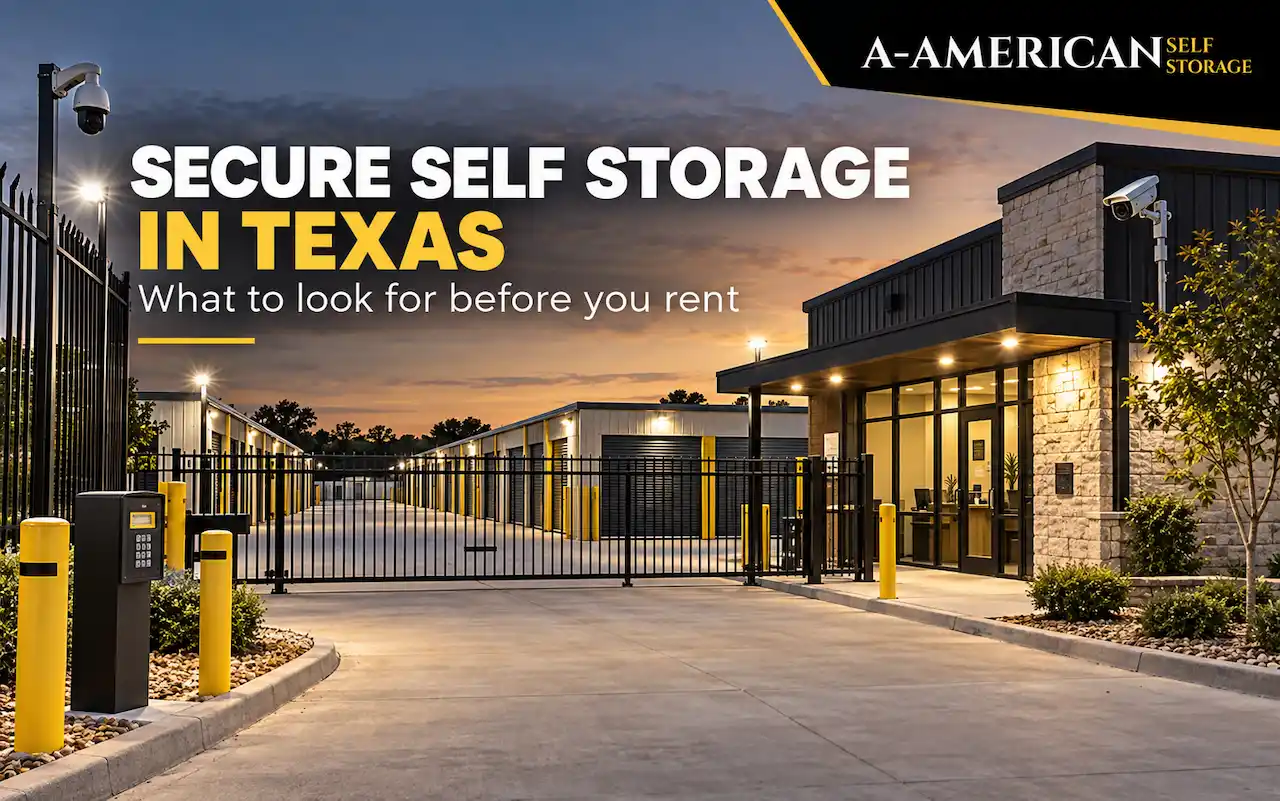
- Perimeter fencing at least 8 feet tall with a single controlled entry point
- Gate access codes that change regularly
- Surveillance cameras covering the property, not just the office
- On-site resident manager who lives at the facility
A facility with cameras but no resident manager means nobody’s watching those cameras at 2 a.m. We’ve had resident managers at every location since we started because empty facilities at night are targets.
Preparing Your Items for Storage
Don’t just throw stuff in boxes and hope for the best. A little prep work prevents a lot of regret six months later.
Packing Supplies You’ll Need
- Sturdy boxes in uniform sizes for stacking
- Plastic bins for long-term storage they don’t collapse
- Furniture covers or old sheets
- Packing tape, markers for labeling
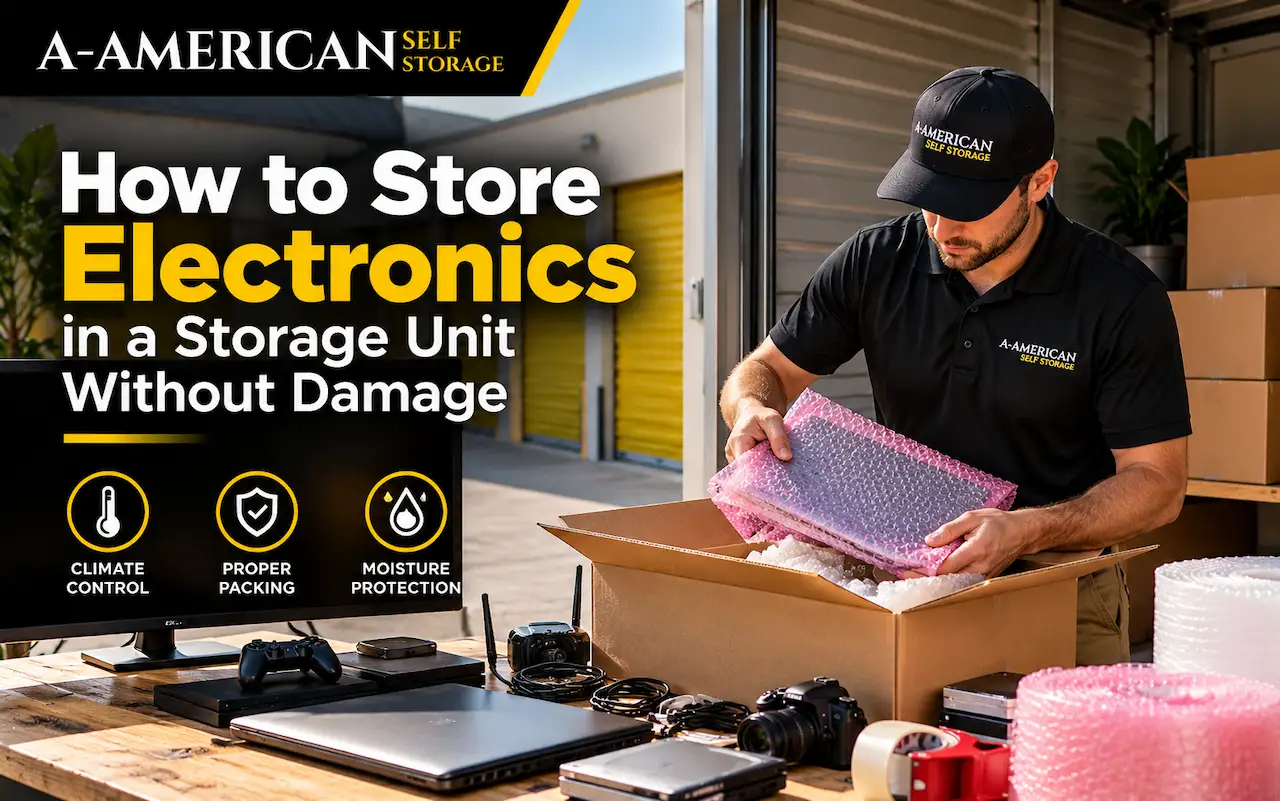
You can grab moving and packing supplies at most storage facilities. We stock everything because people always forget something.
Loading Strategy
Put heavy items on the bottom, lighter boxes on top. Leave an aisle down the middle so you can access the back wall. Store items you’ll need first near the door. Label box sides, not tops you can’t see tops when they’re stacked.
What Not to Store
If you need daily access to your stuff, a storage unit isn’t the right solution. The gate closes at 9 p.m. at most facilities, and driving across town to grab one box gets old fast.
Keep truly irreplaceable items where you can protect them personally. We have excellent security, but insurance only covers replacement value. Family heirlooms, original photos without backups, one-of-a-kind items keep those at home.
Frequently Asked Questions
Can I access my unit anytime?
Most facilities have gate hours, typically 6 a.m. to 9 p.m. daily. Office hours are shorter, usually 9 a.m. to 6 p.m., but you don’t need the office open to access your unit once you have your gate code.
Do I need insurance?
Your homeowner’s or renter’s insurance might cover stored items, but check the policy. Many facilities offer tenant insurance for $10–15 per month. It’s worth it for high-value items.
How much notice do I need to give when I move out?
With month-to-month terms, you can move out anytime. Most facilities ask for notice by the end of your billing cycle to avoid charges for the next month, but there’s no penalty for leaving early.
What happens if I miss a payment?
You’ll get a grace period, usually 5–10 days, then late fees kick in. Miss payment long enough and the facility can auction your items to cover unpaid rent. Don’t let it get there one phone call usually solves the problem.
Ready to Rent Your First Storage Unit in Texas?
We’ve been helping first-time renters since before I-635 was finished. Our team at A-American Self Storage will walk you through sizing, pricing, and everything else. No pressure, no upselling just straight answers.
Call (214) 341-8823 or visit any of our 7 Texas locations to see units in person and ask questions.