
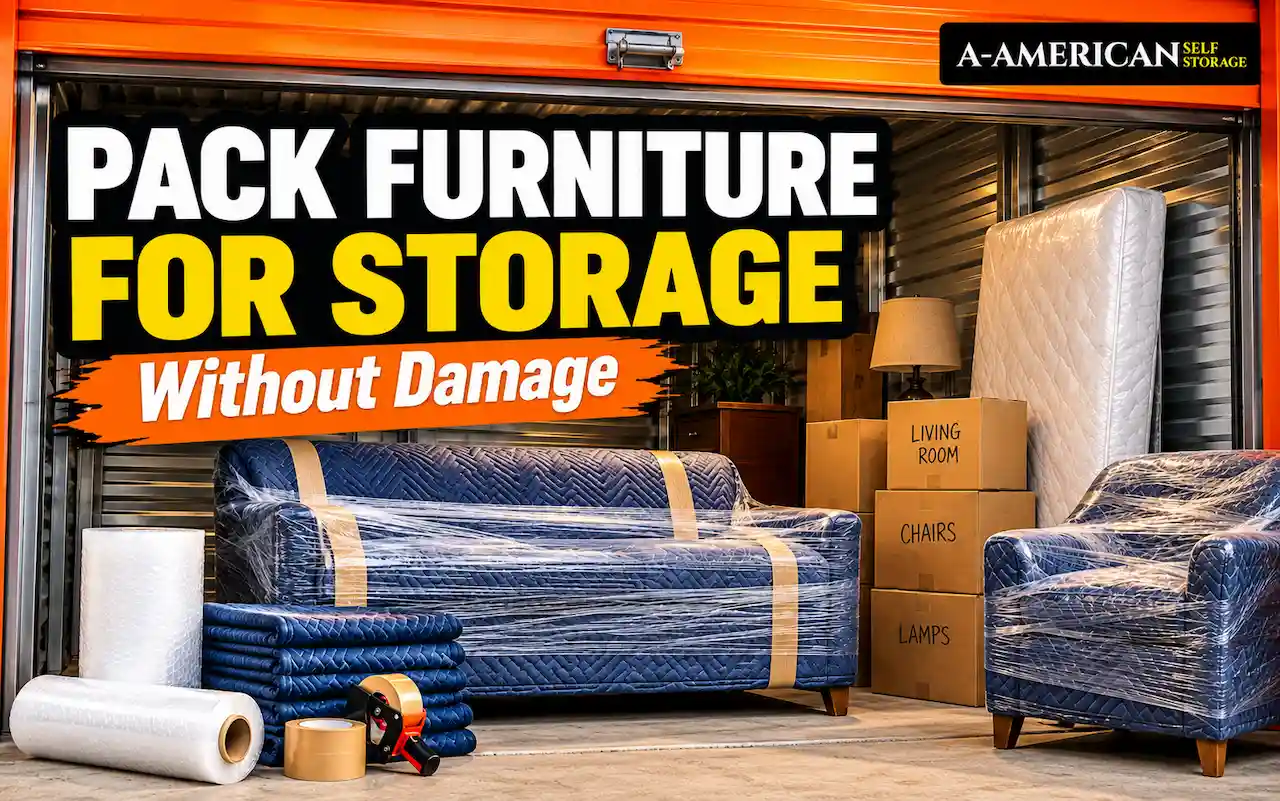
You’re about to put your furniture in storage, and the last thing you need is to pull out a warped dresser or a scratched table six months from now. Furniture doesn’t just need space it needs proper prep, or you’ll pay for it later.
Here’s exactly how to clean, wrap, disassemble, and protect your furniture so it comes out of storage in the same shape it went in.
The Right Order: Clean First, Then Disassemble
Start with a thorough cleaning. Dust, dirt, and food residue attract pests and create odors in storage. Wipe down every surface with appropriate cleaner wood polish for wood, upholstery cleaner for fabric, glass cleaner for mirrors and tabletops.
Let everything dry completely before wrapping. Trapped moisture is the fastest way to mold and mildew, especially in Texas humidity.
Next, disassemble what you can. Take legs off tables, remove headboards from bed frames, take drawers out of dressers. This saves space and protects delicate joints from stress. Keep all hardware in labeled plastic bags taped directly to the furniture piece they belong to.
Gather the Right Supplies
You need more than old blankets and hope. Proper packing materials make the difference between furniture that survives storage and furniture that doesn’t.
- Furniture pads or moving blankets — wrap large pieces to prevent scratches and dings
- Plastic wrap or shrink wrap — holds blankets in place and keeps out dust
- Bubble wrap — for glass, mirrors, and delicate surfaces
- Cardboard corner protectors — shield edges and corners from impact
- Mattress bags — seal out dust, moisture, and pests
- Packing tape — the good stuff, not dollar-store rolls that fail in heat
We stock all of this at our moving and storage supply locations if you need to grab it on your way to the unit.
Wrapping and Protecting Each Type of Furniture
Wood Furniture
Wrap wood pieces in furniture pads first, then secure with plastic wrap. Never put plastic directly against wood it traps condensation and damages the finish. Store wood furniture off the ground on pallets or boards to avoid moisture contact.
Upholstered Furniture
Vacuum thoroughly, then cover with breathable fabric covers or old sheets. Skip plastic it creates condensation that leads to mold. Stand sofas and chairs on end to save floor space, but make sure they’re stable and won’t tip.
Glass and Mirrors
Wrap in bubble wrap, then add cardboard on both sides. Use painter’s tape to make an X across glass surfaces before wrapping if it breaks, the tape holds pieces together. Store vertically, never flat, and never stack anything on top.
Metal Furniture
Wipe down with a dry cloth, then apply a light coat of furniture wax to prevent rust. Wrap joints and mechanisms with bubble wrap to protect moving parts.
How to Arrange Furniture Inside the Unit
Placement matters as much as packing. Put heavy, sturdy pieces on the bottom and toward the back. Stack lighter items on top, but keep weight distributed evenly.
Leave an aisle down the middle if you can. You’ll thank yourself when you need to grab something from the back without unloading the entire unit.
Stand mattresses and sofas on end to maximize vertical space. Never lay mattresses flat with items on top they’ll develop permanent sags.
When Climate Control Makes Sense
If you’re storing antiques, leather furniture, or anything with wood veneer, skip the standard unit and get climate control. Texas temperature swings wreck finishes, cause wood to crack, and turn leather brittle.
You don’t need climate control for metal shelving or plastic outdoor furniture. But if it cost more than $500 or has sentimental value, it’s worth the upgrade. Our climate-controlled units hold steady year-round and keep humidity in check.
Frequently Asked Questions
Should I put furniture directly on the concrete floor?
No. Concrete sweats and pulls moisture into anything sitting on it. Use pallets, plastic sheeting, or plywood to create a barrier between your furniture and the floor.
Can I store furniture in a storage unit long-term?
Yes, with proper prep. We have customers who’ve stored furniture for years without issues. The key is climate control for valuable pieces and keeping everything clean and sealed before it goes in.
Do I need to wrap furniture legs separately?
If they’re detachable, yes wrap them individually and label which piece they belong to. If they’re attached, just make sure the furniture pads cover them completely to prevent scratches.
How do I keep mice and bugs out of upholstered furniture?
Vacuum thoroughly before storage, use breathable covers, and avoid bringing in cardboard boxes that might harbor pests. Our facilities have pest control programs, but prevention on your end is your first line of defense.
What’s the biggest mistake people make when storing furniture?
Not letting things dry completely before wrapping. One damp cushion or unwashed spill, sealed in plastic, will grow mold faster than you’d believe.
Need a Secure Place to Store Your Furniture in Dallas?
We’ve been helping Texas families protect their belongings since 1970. Our facilities have 8-foot perimeter fencing, surveillance systems, and on-site managers who actually live there. Climate-controlled units available at all seven Texas locations.
Call (214) 341-8823 or visit A-American Self Storage to reserve your unit today.