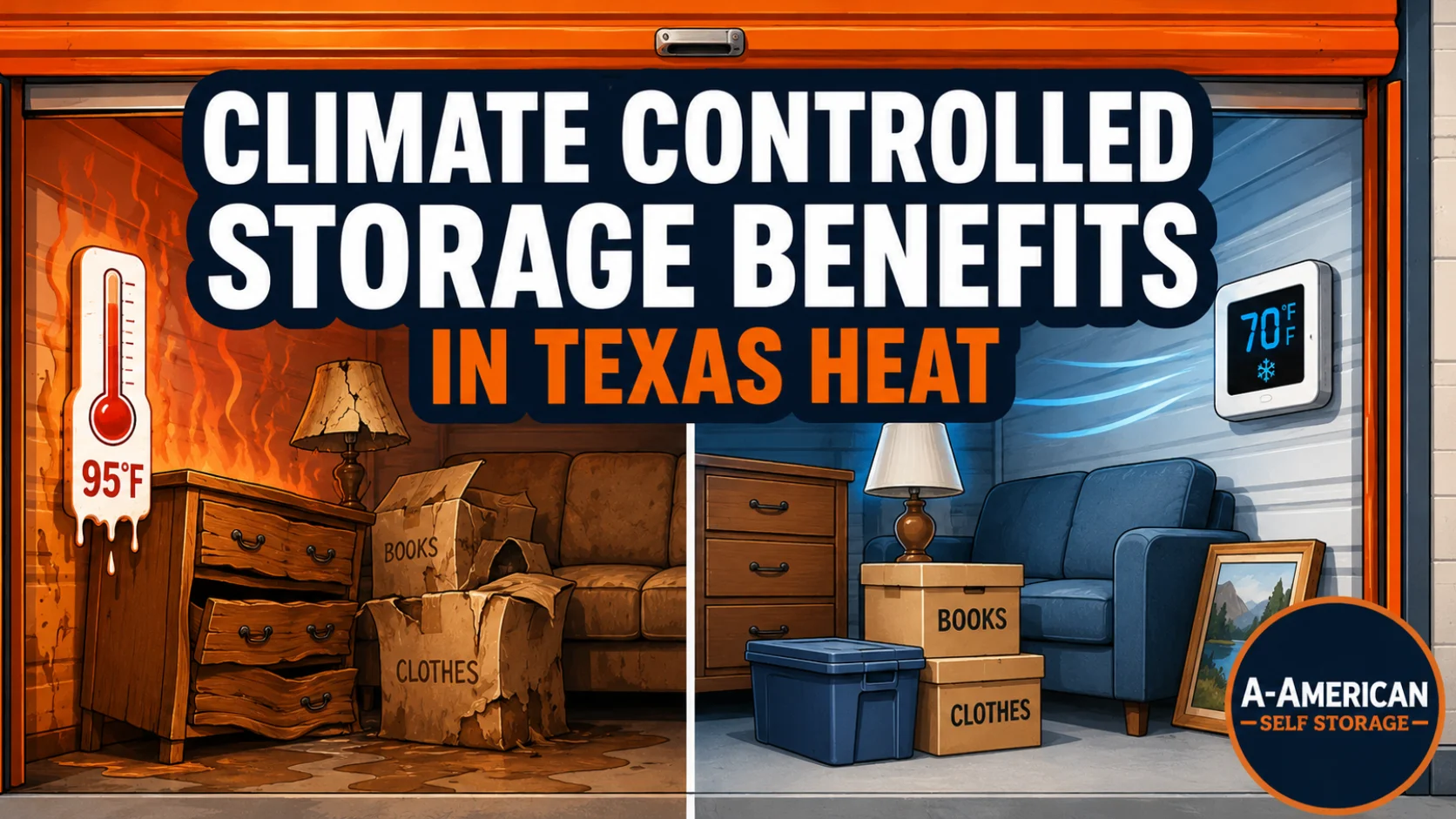
If you’re storing anything made of wood, fabric, leather, electronics, or paper in Texas, you need to know what 95-degree heat and 80% humidity do to those materials over time.
Climate controlled storage isn’t marketing fluff-it’s the difference between opening your unit six months later and finding everything intact versus finding warped furniture, mildewed boxes, and electronics that won’t turn on.
Here’s what climate control actually protects and when it’s worth the extra cost.
What Climate Control Actually Means
Climate controlled units maintain temperature between 55-85°F year-round and keep humidity levels stable. In Texas, that’s a much narrower range than the 40-100+ degree swings and humidity spikes an uncontrolled unit experiences between January and August.
Standard units are just metal boxes. They get hotter than the outside temperature in summer and colder in winter. Climate controlled units are inside insulated buildings with HVAC systems running constantly.
What Climate Control Protects Against in Texas
After 55 years running storage facilities across Texas, I’ve seen what happens to belongings in both types of units. The difference is dramatic.
Heat Damage
- Electronics: Circuit boards warp, batteries leak, screens delaminate. I’ve watched customers pull out flat-screen TVs with visible heat damage that were fine when they went in.
- Vinyl and plastic: Records warp, plastic bins crack and become brittle, vinyl furniture develops permanent creases.
- Photos and documents: Colors fade, edges curl, adhesives in photo albums fail.
Humidity Damage
- Wood furniture: Drawers swell shut, joints separate, veneer peels, warping that makes doors unusable.
- Fabric and upholstery: Mold, mildew, musty odors that never fully come out.
- Metal items: Rust on tools, bikes, appliances, file cabinets—anything with exposed metal.
- Cardboard boxes: They literally soften and collapse in high humidity.
If you’re rotating seasonal items like holiday decorations or winter clothes, climate control prevents that stale smell and moisture damage between uses.
Pest Prevention
Climate controlled units are inside sealed buildings, which means fewer entry points for rodents, insects, and spiders. Standard outdoor units have more gaps and attract pests looking for shelter during extreme weather.
What Actually Needs Climate Control
Don’t pay for climate control if you don’t need it. Here’s the honest breakdown:
Definitely Use Climate Control For:
- Electronics, computers, TVs, stereo equipment
- Wood or upholstered furniture
- Important documents, photos, books, vinyl records
- Musical instruments
- Leather goods, clothing you care about
- Antiques, artwork, collectibles
- Wine, medications, cosmetics
Standard Units Work Fine For:
- Metal tools and lawn equipment (as long as they’re oiled)
- Plastic storage bins with sealed lids
- Outdoor furniture already designed for weather
- Cars, motorcycles, ATVs
- Construction materials, paint (check expiration dates)
If everything you’re storing is garage-type stuff that lives outdoors anyway, save the money and rent a standard unit. Climate control is for things that normally live inside your home.
Cost Difference in Texas Markets
Climate controlled units typically cost 20-40% more than standard units of the same size. At our Dallas location, a 10×10 standard unit runs around $120-140/month, while climate controlled is $160-180/month. That’s an extra $40-50 monthly.
For context: replacing a warped wood dresser or a heat-damaged TV costs way more than a year of climate control. I’ve had customers spend thousands replacing damaged belongings to save $600 in upgraded storage fees.
When Climate Control Isn’t Worth It
If you’re storing items for less than three months, Texas weather probably won’t do enough damage to justify the extra cost—unless you’re storing during peak summer and it’s truly valuable stuff. A short-term standard unit works fine for most people between moves.
Also, if your budget is tight and you’re storing replaceable items, a standard unit with good packing gets you solid protection at half the price.
Frequently Asked Questions
Do climate controlled units have humidity control too?
Yes. The HVAC systems maintain both temperature and humidity. That’s the “controlled” part—it’s not just air conditioning.
Are climate controlled units cleaner?
Generally yes, because they’re indoors in enclosed hallways rather than outdoor drive-up units exposed to dust, pollen, and weather.
Can I switch from standard to climate controlled later?
Absolutely. If you rent a standard unit and notice moisture or temperature issues, just let us know. We’ll help you transfer to a climate controlled unit if one’s available.
Will climate control prevent all mold and mildew?
It dramatically reduces the risk, but you still need to prep items properly. Don’t store damp or dirty items. Clean and dry everything first. Climate control maintains good conditions, but it can’t reverse damage from items that went in already compromised.
Do I need climate control in Webster or Houston versus Dallas?
Houston and Webster actually need it more—coastal humidity is higher and more consistent than Dallas. All Texas locations benefit from climate control for sensitive items, but Gulf Coast locations have the most aggressive humidity year-round.
Ready to Protect Your Belongings in Dallas?
We’ve been helping Texas families choose the right storage since 1970. Whether you need climate controlled protection or a standard unit works fine for your situation, we’ll walk you through the options honestly.
Call (214) 341-8823 or visit A-American Self Storage to book your Dallas appointment.